Crime & Law
The Supreme Court Returns After a Busy Summer. Here’s What to Watch For
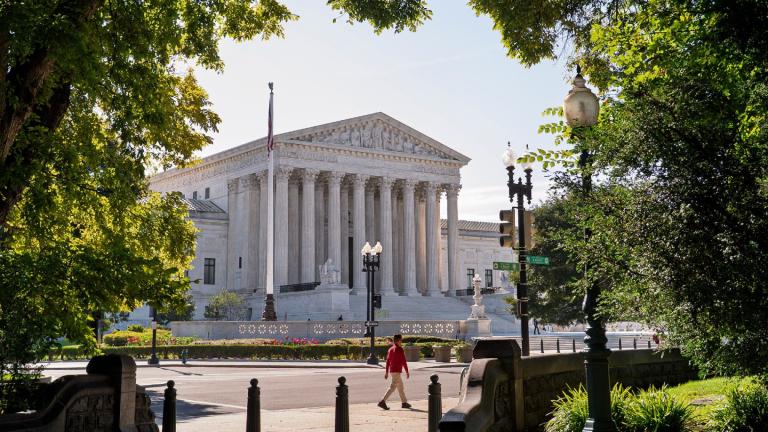
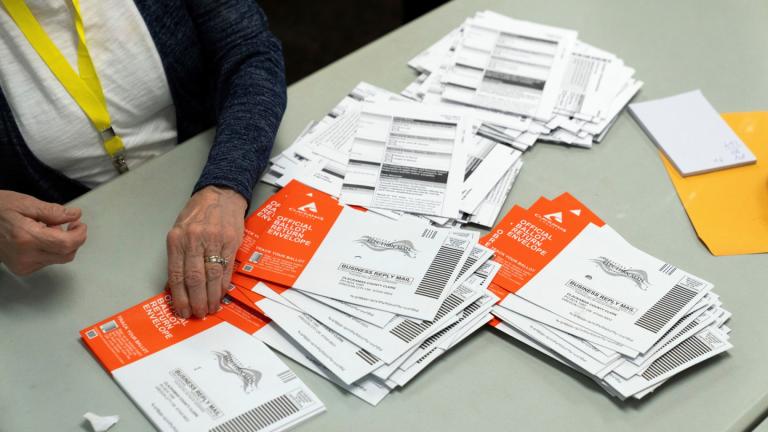
There wasn’t much of a summer break for the U.S. Supreme Court justices this year, with a busy emergency docket covering cases ranging from mail-in voting changes to the White House ballroom construction.
Nevertheless, the nation’s highest court is back to start a new term Monday.
In the coming months, the court is set to hear arguments over Cook County’s ban on assault weapons, a greenhouse gas emissions case that could affect a Chicago lawsuit and a Colorado case on the separation of church and state in school funding.
Here are just a few cases in a packed docket to watch:
Cook County Assault Weapons Ban
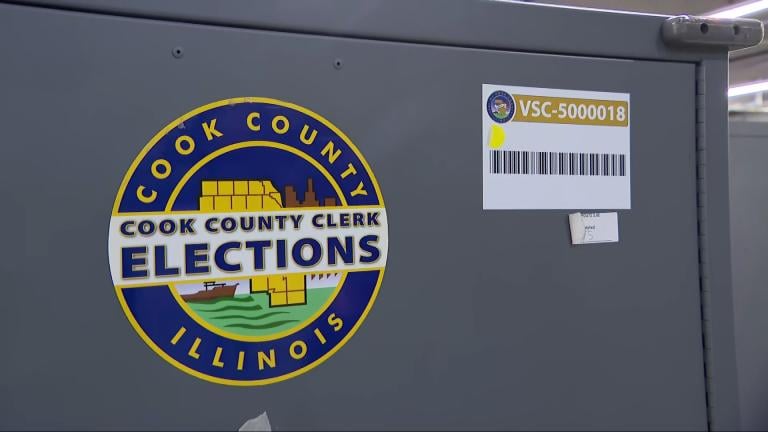
One case with clear local implications is the court’s review of Cook County’s assault weapons ban. More than 125 types of rifles fall under the county law, originally adopted in 1993.
After several unsuccessful attempts by gun rights activists to overturn the ban, the current challenge in front of the Supreme Court was filed in 2021.
“The Supreme Court decided in 2008 — which is not that long ago — that the Second Amendment protects an individual right to have a handgun in your home for self-defense,” said David Franklin, a law professor at DePaul University and former clerk for Justice Ruth Bader Ginsburg.
Since then, Franklin said, the court has doubled down on an “originalist” view of the Second Amendment. Because of that, states or localities seeking to regulate gun ownership need to show their regulations have roots going back centuries.
The Cook County ban applies to semi-automatic rifles that can use high-capacity magazines, including the AR-15. One question the court will have to ask is whether these types of weapons were included in the intent of the Second Amendment’s authors.
“The court has become increasingly supportive of Second Amendment protections,” said Harold Krent, a law professor at Chicago-Kent College of Law.
“The court in the past has said that military-type weapons can be regulated, … grenades can be regulated, bowie knives can be regulated,” Krent said. “But the difference is the number of people that own them. There may be 15-20 million people in the United States that own an AR-15 or a similar assault weapon.”
Greenhouse Gas Emissions
Across the country in Boulder, Colorado, a lawsuit against several oil companies to recoup costs from fighting climate change could have national impacts. Similar to past lawsuits against the tobacco and opioid industries, local governments are saying the oil companies knew the harms of greenhouse gas emissions and should be on the hook for damages.
The question for the court to consider — “is it permissible for a state, through its judicial process, to regulate what a company from another state did in that other state,” Franklin said.
The oil companies arguing the case, Suncor and ExxonMobil, say only the federal government can regulate interstate spillover effects, including water and air pollution.
Justice Samuel Alito has recused himself from the case due to specific investment holdings, opening the door for a possible 4-4 split.
Separately, the city of Chicago is suing six oil and gas companies. While that case is not in front of the Supreme Court, the decision in the Boulder case could impact its future.
Catholic Preschool Funding
Another Colorado case with national implications is playing out over the use of taxpayer money at religious schools. At stake is the question of whether religious freedom takes precedence over state nondiscrimination laws.
In St. Mary Catholic Parish v. Roy, a Catholic school is arguing it should be granted state funds for universal preschool even though it does not accept students who themselves, or their parents, are members of the LGBTQ community.
The state says that policy violates nondiscrimination laws and disqualifies the school from receiving the funding.
“In short, the Supreme Court used to believe in a separation of church and state, so that it was impermissible for the government to hand over taxpayer money to religious schools or institutions,” Franklin said. “Now under the Roberts court, the opposite seems to be the case. Not only is it permissible, but it often is required.”
Matt Masterson and the Associated Press contributed to this report.